
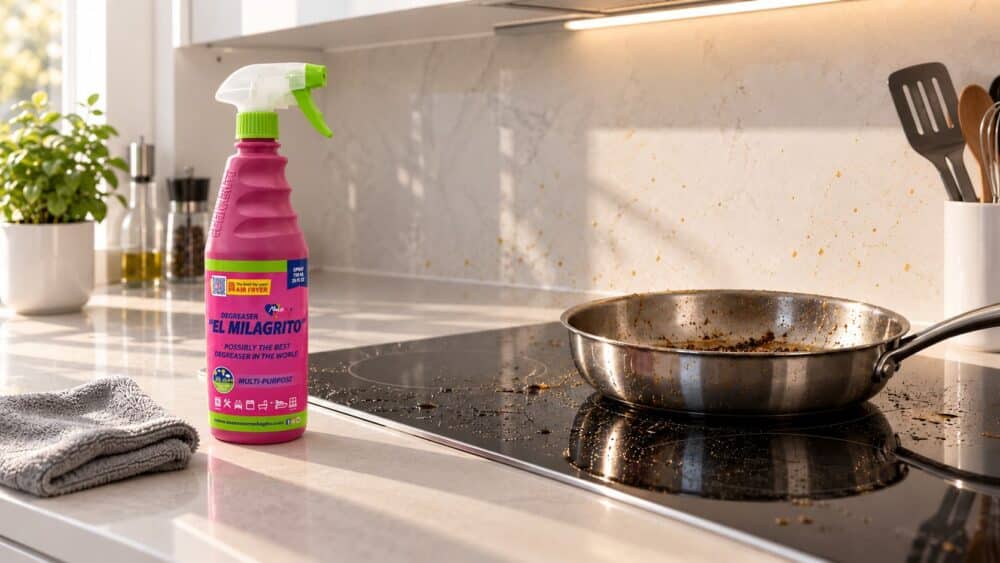
Frying food can leave grease on the cooktop, countertop, backsplash, and other nearby surfaces. Follow this cleaning order to remove splatters before they turn into a sticky film.
Frying can leave tiny drops of oil in many more places than can be seen at first glance. The cooktop and the pan hold the most obvious dirt, but grease particles can also reach countertops, the backsplash, the range hood, nearby cabinets, and the exterior of some appliances.
To clean the kitchen after frying, wait until the cooktop and utensils are completely cool, remove food scraps, and tackle splatters with El Milagrito Multi-Purpose Degreaser, following the instructions on the package. Work from the highest areas to the lowest and completely rinse surfaces that may come into contact with food. Cleaning as soon as possible prevents oil from mixing with dust and forming a sticky film that is harder to remove.
Why does grease remain in the kitchen after frying?
When oil reaches a high temperature, water bubbles in the food can cause small splatters. Some are visible, but others disperse into very fine droplets and settle on nearby surfaces. Grease usually builds up especially on:
- Cooktop or burners
- Walls, tiles, or backsplash
- Countertops
- Range hood
- Knobs and handles
- Sides of nearby cabinets
- Exterior of the oven or microwave
- Floor around the cooking area
If not removed, this grease traps dust and other particles. Over time, the surface stops looking just oily and takes on a sticky feel.
What you need to remove grease after frying
Prepare:
- El Milagrito Multi-Purpose Degreaser
- Clean, soft cloths
- Paper towels to soak up excess oil
- Water for rinsing
- A container to rinse the cloth
- A small, soft-bristled brush (only if the surface allows it)
Avoid metal scouring pads, blades, sharp objects, and abrasive materials. They can scratch the cooktop, damage the finish on cabinets, or harm non-stick surfaces. Before starting, consult the instructions for El Milagrito and the maintenance guidelines for each material. If you have doubts about a surface, test the product on an inconspicuous area.
Step-by-Step: How to clean the kitchen after frying
- Ventilate the kitchen and use the hood
Keep the range hood running during food preparation and for a few minutes afterward, according to the manufacturer’s recommendations. You can also ventilate the room when possible. This helps reduce odors and removes some of the airborne particles before they settle on cabinets and walls. The hood reduces grease dispersion but does not completely eliminate the need to clean surfaces.
- Wait for the oil and cooktop to cool down
Do not clean a pan with hot oil or apply product to a cooktop that is still hot. Turn off the cooking zone and wait until the pan, oil, and cooktop are completely cool. In addition to avoiding burns, this reduces the risk of sudden temperature changes affecting certain surfaces. Do not pour used oil down the sink. Dispose of it according to your local waste management guidelines.
- Remove food scraps and excess oil
Pick up crumbs, batter bits, and other solid debris with a paper towel or cloth. If there is a visible amount of oil on a surface, absorb the excess first. Applying degreaser over a puddle of grease can spread the mess and make cleaning harder. Do not push debris into joints, burners, or the edges of the cooktop.
- Clean the cooktop or cooking area
Once cool, apply El Milagrito Multi-Purpose Degreaser following the package directions, provided the surface is compatible. Let it sit for the recommended time without allowing it to dry out. Afterward, wipe away the grease with a soft cloth, rinse thoroughly, and dry. On cooktops with knobs, seals, or electrical components, avoid spraying directly onto sensitive areas. Applying the product to the cloth allows you to control moisture better. If you use a gas stove, do not get liquid inside the burners. Follow the manufacturer’s specific instructions for dismantling and cleaning its components.
- Eliminate splatters from the backsplash
The tiles or panels located behind the cooktop receive a significant portion of the splatters. Work in small sections: apply El Milagrito according to the instructions, let it act for the recommended time, wipe with a soft cloth, rinse to completely remove the product, and dry the surface. Around grout, sockets, or edges, apply the product to the cloth instead of spraying directly. Prevent liquid from penetrating electrical installations or unsealed joints.
- Wipe down the countertop
Remove utensils and solid debris first. Then clean the countertop with the product, provided the material is compatible. Pay attention to:
- The area next to the pan
- Space used to rest utensils
- Edges close to the cooktop
- The bottom of containers or packaging
- Corners where oil may have settled
Thoroughly rinse surfaces that will come into contact with food and dry them before using them again. Countertops made of natural stone, wood, porous materials, or special finishes may need specific care. Always consult the manufacturer’s recommendations.
- Clean knobs, handles, and touchpoints
During cooking, it is common to touch knobs, drawers, or the refrigerator with oil-stained hands. Apply a controlled amount of El Milagrito to a cloth and wipe only compatible surfaces. Do not spray directly onto switches, electronic controls, slots, or mechanisms. Rinse when applicable and dry carefully to prevent moisture from lingering around edges and joints.
- Check nearby cabinets
Doors located next to the cooktop can receive small droplets that go unnoticed. On compatible lacquered or laminated cabinets, apply the product in a controlled manner, preferably onto a cloth. Avoid soaking edges, joints, hinges, or hardware, and dry completely. Do not use the product on untreated wood, porous surfaces, or delicate finishes without consulting the manufacturer’s instructions first and conducting a test on an inconspicuous area.
- Clean the exterior of nearby appliances
The microwave, oven, air fryer, or other appliances located nearby can get splatters. Check that they are turned off, cool, and unplugged when applicable. Apply the product to a cloth and clean only compatible exterior surfaces. Do not spray toward panels, fans, grilles, connections, heating elements, or electrical components. Always follow the cleaning manual for each appliance.
- Finish with the sink and check the floor
After rinsing the cloths and utensils, clean the sink following the instructions for El Milagrito. Wipe the edges and the area around the faucet, rinse, and dry. Also, check if small drops of oil have fallen onto the floor. A greasy surface can be slippery. Clean any stains according to the product instructions and the flooring manufacturer’s recommendations.
How to clean the range hood after frying
The exterior of the hood can accumulate a thin film of grease, especially when frying frequently. Make sure it is turned off and cool. Apply El Milagrito to a cloth, provided the exterior finish is compatible, and clean without letting liquid penetrate controls, motors, lights, or slots.
Filters require a specific procedure depending on the model. Check the manual to verify:
- If they can be removed
- If they are washable
- What products are authorized
- If they need to be replaced periodically
- How they should be dried before putting them back in place
Do not spray any product into the interior of the hood or onto its electrical components.
How to remove a sticky film of grease
When grease has been building up over time, it may be necessary to repeat the cleaning process. Work in small areas: remove dust and debris, apply El Milagrito according to the instructions, respect the contact time, wipe with a soft cloth, rinse completely, and dry the surface. Repeat if dirt remains.
Do not extend the contact time beyond what is indicated or increase scrubbing force. Multiple controlled applications are preferable to using abrasive materials that could ruin the finish.
Errors to avoid after frying
- Cleaning while the oil is still hot: This can cause burns and cause the grease to spread. Wait for everything to cool down.
- Applying product on a hot surface: The product could dry too quickly, and some surfaces could be affected by the temperature change.
- Starting with the countertop and finishing with the hood: Dirt from higher areas can fall onto what you have already cleaned. Work from top to bottom.
- Using an oil-saturated cloth: A dirty cloth redistributes grease. Rinse it frequently or replace it with a clean one.
- Spraying onto electrical controls: Apply the product to the cloth when working near knobs, sockets, panels, or slots.
- Using abrasive scouring pads: They can scratch cooktops, steel, lacquered surfaces, and other finishes.
- Forgetting to rinse: Completely remove cleaning residues, especially on surfaces that may come into contact with food.
- Leaving splatters for another day: Fresh grease is usually easier to remove. When mixed with dust and dried, it requires more intensive cleaning.
How to make less of a mess in the kitchen when frying
Although not all splatters can be avoided, these habits help reduce them:
- Dry excess moisture from food before putting it into the oil.
- Do not overcrowd the pan.
- Introduce food carefully.
- Use utensils that are long enough.
- Maintain the proper temperature for the preparation.
- Use the range hood.
- Place used utensils on an easy-to-clean surface.
- Wipe away splatters once the cooking area has cooled down.
- Periodically clean the exterior of the hood and nearby cabinets.
- Do not completely cover a pan during frying or use accessories not indicated for that use.
Frequently Asked Questions about cleaning after frying
Wait until the cooktop is cool, remove food debris, and absorb excess oil. Apply El Milagrito Multi-Purpose Degreaser on compatible surfaces, let it act according to instructions, wipe with a cloth, rinse, and dry.
Check the cooktop, backsplash, countertop, exterior of the hood, knobs, handles, nearby cabinets, sink, and the floor around the cooking area.
Remove dust first, apply the degreaser following instructions, and let it act for the indicated time. Clean with a soft cloth, rinse, dry, and repeat the process if necessary.
No. Turn off the cooktop and wait until it has completely cooled before cleaning it. Also, check the manufacturer’s instructions to see what products and methods it allows.
It can be used on compatible surfaces following the instructions on the package. On lacquered or laminated cabinets, apply a controlled amount and test first on an inconspicuous area. Avoid using it on untreated wood or delicate finishes without verifying compatibility.
Use the hood during preparation and for a few minutes afterward, ventilate when possible, properly dispose of used oil, and clean splatters and greasy surfaces when they are cool.
Small drops of oil can fall or disperse around the cooking area. Check the floor after cooking and clean any stains according to the product instructions and the flooring manufacturer’s recommendations.
The exterior should be wiped down whenever it shows grease or splatters. The frequency of cleaning or replacing the filters will depend on the model, the type of filter, and how much cooking is done. Consult the manufacturer’s manual.