
The grease generated while cooking doesn’t always stay on the cooktop, countertop, or range hood. Small particles released during food preparation end up settling on cabinet doors, drawers, handles, and other kitchen surfaces.
When this grease mixes with dust and is left uncleaned for too long, it forms a sticky film that becomes increasingly difficult to remove. Fortunately, acting with the right product and procedure allows you to restore the cleanliness of your cabinets without turning the task into an endless scrubbing session.
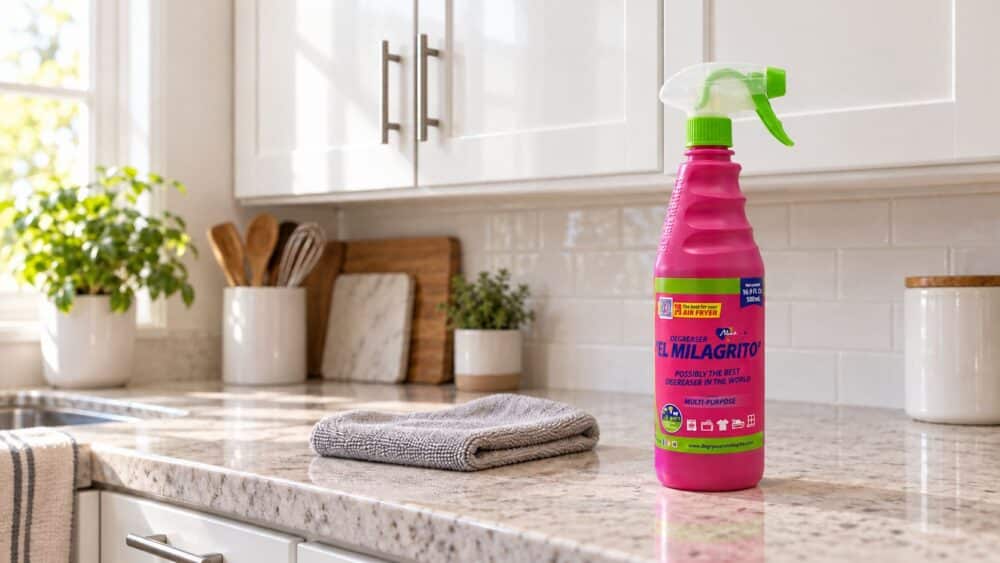
To remove sticky grease from kitchen cabinets, it is best to first wipe away surface dust, apply El Milagrito Multi-Purpose Degreaser following the instructions on the packaging, let it act briefly, and wipe the product off completely with a damp cloth. Before starting, always check the cabinet manufacturer’s recommendations and perform a test on an inconspicuous area.
Why does sticky grease build up on kitchen cabinets?
When frying, roasting, or cooking at high temperatures, some of the grease disperses as tiny airborne particles. Although the range hood helps trap them, a portion can end up on nearby surfaces.
Over time, these particles combine with dust, steam, and other residues. The result is a tough-to-remove layer that shows up especially on:
- Doors located next to the cooking area.
- Cabinets positioned above the cooktop.
- Handles and knobs.
- Edges and moldings.
- The tops of the cabinets.
- Sides close to the oven or small appliances.
The longer grease sits on a cabinet, the more effort it may take to remove. Because of this, regular wipe-downs are usually easier than waiting for a thick, sticky film to form.
What you need to clean cabinet grease
To complete this task, you can use:
- El Milagrito Multi-Purpose Degreaser.
- One or more clean, soft cloths.
- Water.
- A container to dampen and rinse the cloth.
- A small, soft-bristled brush, only if the cabinet finish allows it.
It is not recommended to use abrasive scouring pads, blades, or metal objects. These items can scratch the surface or ruin its finish.
How to remove sticky grease from kitchen cabinets step-by-step
1. Check the material and manufacturer’s instructions
Not all kitchen cabinets have the same finish. They can be made of or coated with wood, melamine, laminate, lacquer, or other materials. Before applying any product, consult the manufacturer’s maintenance instructions. Additionally, run a test on an inside corner or a less visible spot to make sure the finish doesn’t lose color, shine, or uniformity. Special attention should be paid to untreated wood, porous surfaces, and delicate or damaged finishes.
2. Remove dust and surface dirt
Wipe with a soft cloth to remove dust, crumbs, and loose debris. If degreaser is applied directly to a dust-covered surface, it can form a messy mixture that makes cleaning harder. Work from top to bottom to prevent dirt from falling onto areas you have already cleaned.
3. Apply El Milagrito Multi-Purpose Degreaser
Use El Milagrito Multi-Purpose Degreaser according to the instructions on the package. On vertical surfaces, small areas, or close to joints, hinges, and edges, it is preferable to apply the product onto a cloth rather than spraying it directly. This allows better control over the amount used and prevents liquid from seeping into sensitive spots. Do not soak the cabinet or let product pool on edges, seams, or hardware.
4. Let it sit for a brief period
Allow the degreaser to work for the recommended time. This helps break down the grease film and reduces the need to scrub too hard. Do not let the product dry on the surface. Working in small sections makes it easier to control both the dwell time and the subsequent removal.
5. Wipe away the grease with a soft cloth
Wipe the surface using gentle movements. On smooth doors, you can wipe in a single direction; if there is a wood grain, it is best to follow its direction. When the cloth accumulates dirt, rinse it or swap it for a clean one. Repeatedly using a saturated cloth can spread the grease instead of removing it.
6. Focus on handles, edges, and grooves
Handles and door edges collect concentrated grease due to frequent hand contact. If the material allows, use a folded cloth or a soft brush to reach into tight corners. Avoid letting liquid penetrate into hinges, joints, screws, or unsealed edges.
7. Rinse and dry completely
Wipe away any product residue with a clean cloth dampened with water, following the package directions. Afterwards, dry the surface to prevent water marks, moisture in the edges, or buildup around the hardware.
How to clean cabinets with heavy grease buildup
If the grease layer is old, it is better to repeat the process rather than scrubbing aggressively or leaving the product on for too long. Divide the cabinet into small sections:
- Remove dust.
- Apply the degreaser in a controlled manner.
- Let it sit according to the instructions.
- Wipe away the dirt.
- Rinse the cloth or use a clean one.
- Repeat the application if necessary.
- Rinse and dry completely.
The tops of cabinets usually require special attention because they accumulate grease and dust for months without being visible from the floor.
Mistakes to avoid
- Spraying too much product: Using a larger amount doesn’t necessarily mean it will clean better. Excess liquid can seep into joints, edges, and hinges.
- Scrubbing with abrasive materials: A harsh scouring pad might remove the dirt, but it can also scratch or dull the cabinet’s finish.
- Letting the product dry: The surface should be worked on in zones so you can wipe the product off before it dries out.
- Not checking the material: A technique that works well for a durable finish might not be safe for untreated wood, peeling paint, or particularly delicate surfaces.
- Cleaning the whole kitchen with the same cloth: When a cloth becomes saturated, it redistributes the grease. Rinse it frequently or change it out during cleaning.
- Forgetting to rinse and dry: Completely remove residues and avoid leaving moisture on the cabinet edges or joints.
How to keep grease from building up again
A simple routine significantly reduces the formation of that sticky film:
- Run the range hood while cooking.
- Clean up splatters as soon as they happen.
- Wipe down cabinets next to the stove on a weekly basis.
- Clean handles and knobs more frequently.
- Periodically check the tops of the cabinets.
- Do a more thorough cleaning as soon as you notice a surface getting slightly sticky, without waiting for the layer to harden.
El Milagrito Multi-Purpose Degreaser allows you to tackle dirt in various areas of the kitchen with a single product, always respecting the package instructions and the surface manufacturer’s recommendations.