
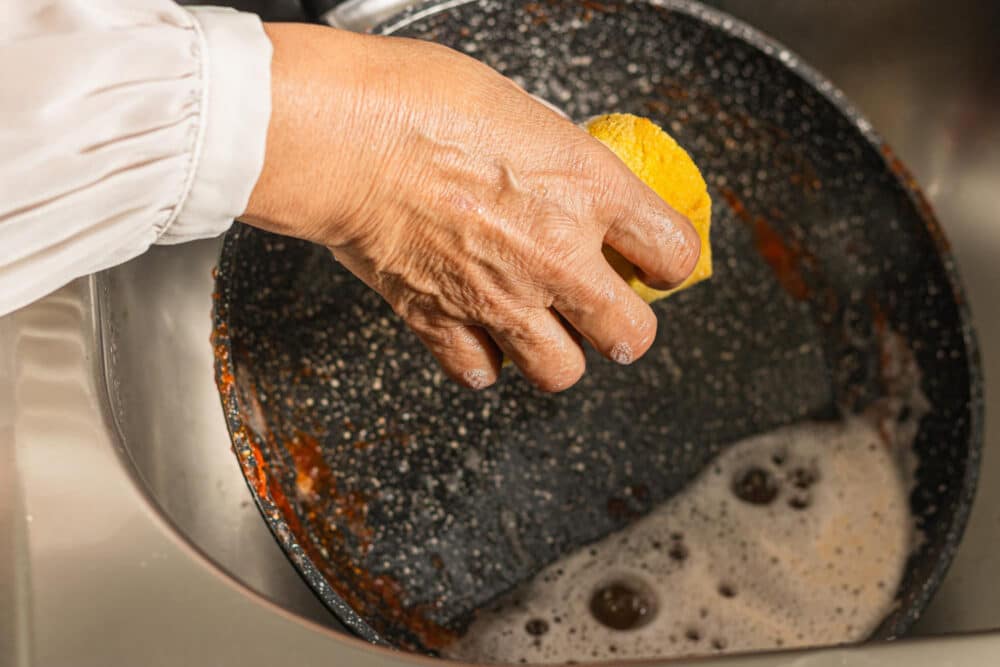
Has your pan burnt and now you’re wondering if it can still be saved? It’s one of the most common problems in any kitchen, whether at home or in professional settings. Built-up grease, burnt food residue, and excessive heat can leave a pan blackened, sticky, and seemingly impossible to restore. The good news is that, in many cases, it can be salvaged. With the right approach and effective products like the El Milagrito Multi-Purpose Degreaser, it’s possible to remove burnt grease and improve the condition of the surface without damaging it. So join us as we take you through the basics of how to clean a burnt pan step by step, which mistakes to avoid, and what to do depending on the type of material.
Why Does a Pan Burn?
Pans usually burn because of a combination of high temperatures and grease buildup. When oil stays on the heat for too long or food residue sticks to the surface, a carbonized layer forms that can be difficult to remove.
The most common causes are:
- Cooking at excessively high temperatures.
- Leaving the pan on the heat for too long.
- Not cleaning it properly after each use.
- Grease buildup on the bottom and edges.
- Using the wrong utensils or cooking techniques.
In addition, not all pans react the same way. A non-stick pan requires different care than a stainless steel or cast-iron pan.
What You Should NOT Do When Cleaning a Burnt Pan
Before you start cleaning it, there are several very common mistakes that can make the problem worse:
- Scraping with knives or metal objects.
- Using overly abrasive scrubbers.
- Pouring cold water onto a hot pan immediately.
- Applying unsuitable abrasive products.
- Putting it in the dishwasher before removing the burnt residue.
These mistakes can scratch the coating, warp the base, or shorten the lifespan of the pan.
How to Restore a Burnt Pan Step by Step
Remove Surface Residue
Let the pan cool down slightly. Then, use paper towels or a soft spatula to remove larger food scraps and surface grease.
Do not try to scrape off the blackened areas yet.
Soften the Burnt Grease
Fill the pan with hot water and add a few drops of dish soap. Let it sit for 15 to 30 minutes to soften the burnt residue.
If the burn marks are more severe, you can add baking soda and a little vinegar to help loosen the stuck-on residue.
Use an Effective Degreaser
When grease is heavily stuck on, homemade remedies are not always enough. In these cases, using a specialized product makes the process much easier.
El Milagrito Multi-Purpose Degreaser helps remove built-up grease, carbonized residue, and stubborn dirt in both home and professional kitchens.
To use it correctly:
- Spray the product onto the burnt area.
- Let it sit for a few minutes.
- Scrub gently with a non-abrasive sponge.
- Repeat if necessary on the most affected areas.
This process helps reduce effort while protecting the pan’s surface.
Rinse and Dry Thoroughly
Once the dirt has been removed, rinse thoroughly with water and dry the pan completely to prevent stains, rust, or moisture buildup.
How to Clean a Burnt Pan Depending on the Material
Non-Stick Pan
Non-stick pans require extra care. Avoid metal utensils and overly harsh products that could damage the coating.
It’s best to use soft sponges and suitable degreasing products.
Stainless Steel Pan
This type of pan handles intensive cleaning better. Hot water and degreasers work especially well for removing burnt residue.
Cast-Iron Pan
It should never remain soaked for too long. After cleaning, it’s recommended to dry it immediately and apply a thin layer of oil to protect it.
Aluminum Pan
Aluminum can become damaged by abrasive products. Use gentle cleaning methods and avoid scraping the surface.
Homemade Tricks to Clean a Burnt Pan
There are several popular home remedies that may help when the burn marks are not too severe:
- Baking soda and vinegar.
- Lemon and salt.
- Boiling water with dish soap.
- Baking soda paste.
Although these methods can work in some situations, heavily carbonized grease often requires a lot of effort and repeated applications.
That’s why many people choose specialized products like the El Milagrito Multi-Purpose Degreaser to save time and achieve better results on stubborn surfaces.
How to Prevent a Pan from Burning Again
The best way to prevent burning is by maintaining the pan properly after every use.
These tips help extend the lifespan of your cookware:
- Avoid cooking constantly at maximum heat.
- Clean grease immediately after use.
- Don’t leave food residue stuck to the surface.
- Use suitable kitchen utensils.
- Dry the pan properly after washing.
- Perform deep cleaning regularly.
Keeping the surface free from grease buildup significantly reduces the risk of future burning.
When Should You Replace a Pan?
Although many pans can be restored, there are situations where replacing them is the best option.
You should consider replacing your pan if:
- The non-stick coating is peeling.
- The base is warped.
- There are cracks or structural damage.
- The burnt marks remain after repeated cleaning.
- Food constantly sticks to the surface.
In these cases, continuing to use the pan may affect both cooking performance and food safety.
Cleaning Solutions that Work for You
Now that your pan is back in tip top shape, it’s time to start planning your next dinner party. For more cleaning tips and household hacks, you can visit our blog.
Frequently Asked Questions About Burnt Pans
Yes, in many cases it’s possible to remove most of the burnt residue using hot water, degreasing products, and gradual cleaning.
The most effective method is usually to soften the grease first and then apply a specialized degreaser to remove carbonized residue.
It can help with light burn marks, although heavily built-up grease usually requires a stronger product.
Use soft sponges, avoid metal utensils, and choose non-abrasive cleaning products.
Specialized degreasers help remove grease and stubborn dirt more quickly and effectively.